
Recent Articles
- Jack Charles, Jayne Watson and the Fight for Real Stories
- Francis Lickerish: Q&A
- The Power of a First Line: On Tim Robinson’s Hatham Hall
- Q&A with Jack Charles
- Q&A with Lindsey Mellon
2023-05-05 | Q&A
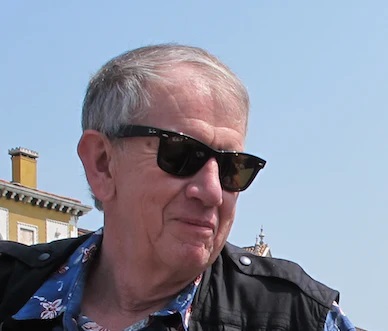
My parents bought a cottage in a small Cornish village close to Port Isaac in the 1960s and we would drive in our Morris Minor down the A303 past Stonehenge which was then protected by a single ribbon of wire 18 inches off the ground. So you just stepped over to be amongst the stones.
In 1964 the cult director Roger Corman employed myself and Paul Mayersberg to shoot second unit on “The Tomb of Ligeia”, his final stab at the Poe series of films which made him famous amongst horror fans. Mayersberg was a schoolfriend of mine (he subsequently became a writer, scripting “The Man Who Fell to Earth” for Nic Roeg and “Merry Christmas Mr Lawrence” for Nagisa Oshima.) I played Vincent’s Price’s double in our shoot (very badly) which took in Stonehenge. We just stepped over the wire with our Arriflex camera and shot what we wanted! I tried to walk like Vincent but made a pretty good balls of it.
Indeed there are many books on Stonehenge speculating on its past and one particularly influential to my generation was “Stonehenge Decoded” positing that the stones acted as an early computer, predicting particularly the arrival of the equinox’s and the subsequent unfolding of the seasons. Later of course it was pointed out that if you have enough of a collection of stones and holes in the ground you can more or less arrive at any combination to make whatever point you require to underscore. Our book does not ignore evidential speculations generation to generation, but rather concentrates on the influence that Stonehenge had on the creative imaginations of artists, poets, writers historians (and even photographers!). We are not aware of any book published as yet which takes this “artistic” approach to our greatest historical monument.
Constable, Henry Moore, John Fowles.
It has the sense, taste and smell of death to me. I think it can be seen as a doorway to Hades. But if indeed this was its first purpose, to celebrate and honour the dead, it has been co-opted for many more uses over the years, and this has diluted the feeling of doom when one steps into the magic inner circle (not allowed now, only by special appointment!). Stonehenge can be what you personally want or need to make of it.
My experience is in trying to convey the element of mystery and timelessness of the stones, through the ravages of eons and the moronic assaults on it by fake archaeologists, incompetent well-wishers and the simply mad (Druids). With my photography and now painting, I aspire to the poetical but mainly fall woefully short.
I did spend a dawn alone there in the 1990s, courtesy of English Heritage. The photographs and paintings of mine in the book record this time which I shall never forget.